
11 March 2026
Lenten Disciplines: Fasting for Growth
By Stefan Kaminski
I am not particularly green-fingered, but every year I wince slightly less at what appears to be the gardeners’ violent attack on the flower beds that border the patio area at Theodore House. I find it almost an act of faith to believe that the apparent decimation can bring about growth: but as soon as the weather obliges, grow it does, and the beds are always somehow overflowing by the summer.
The season of Lent is about precisely this, in a spiritual sense.
The very word ‘Lent’, in its Anglo-Saxon origins, denotes the spring season, carrying with it this connotation of growth. The gardener’s practice of cutting back, weeding and clearing out in preparation for a healthy spring is a feature of both the natural world and – allegorically-speaking – of the spiritual.
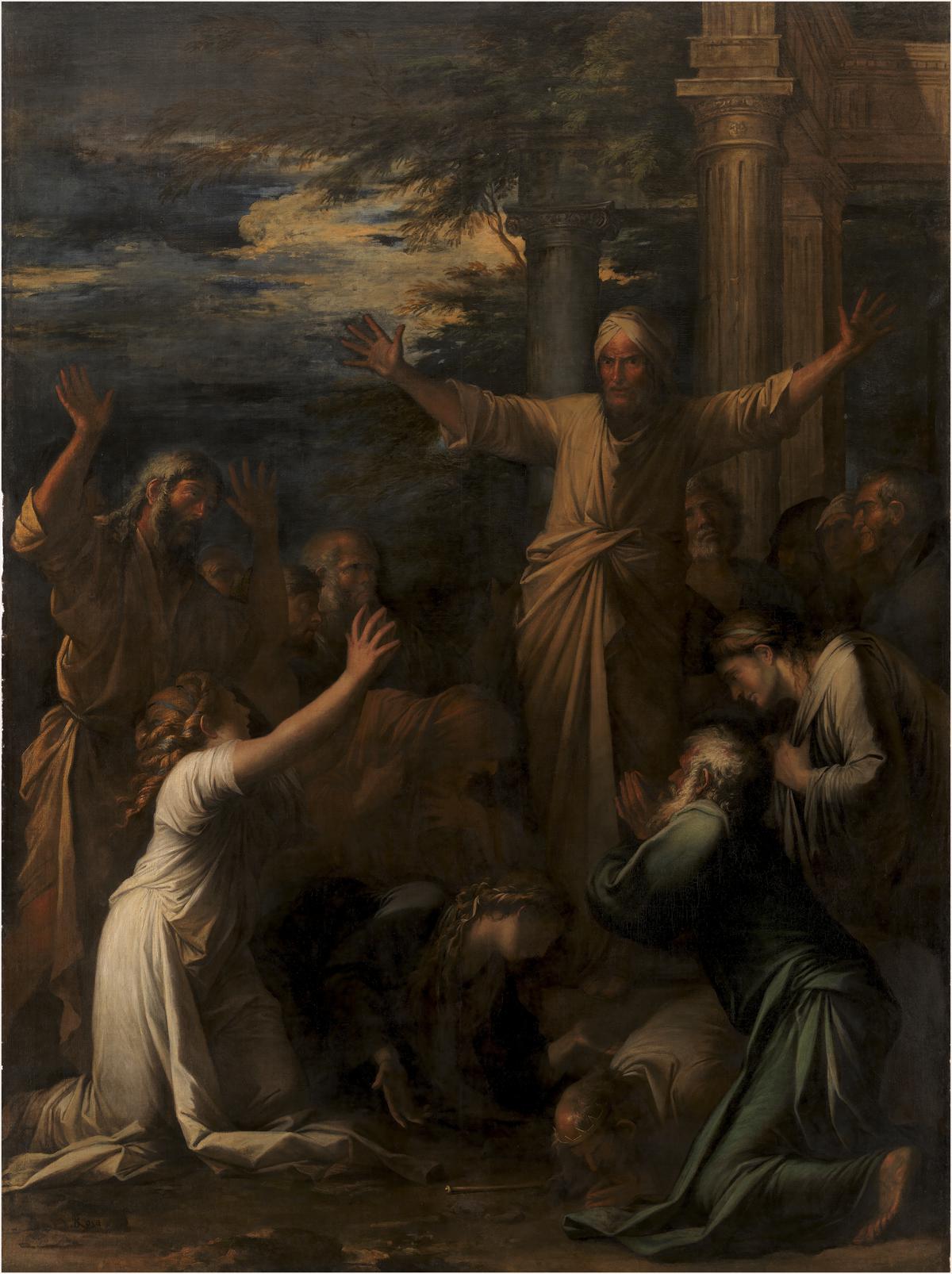
Arguably the simplest and most basic form of such ‘negative investment’ in spiritual terms, and which stretches back into Old Testament history, is that of fasting. Whether as a concrete sign of penitence or as the instinctive Friday practice of the earliest Christian communities in commemoration of Christ’s death and anticipation of the Sunday Resurrection, fasting involves a commitment of the whole person – body and soul – to say ‘no’ for the sake of a greater ‘yes.’
It is important not to lose sight of this ‘yes’, which provides the necessary context for Christian fasting. This is beautifully illustrated for us in the accounts, especially that of St Matthew, of Christ’s temptations in the desert, which form the most immediate Scriptural backdrop to our Lenten practice.
In examining this precursor to Jesus’ public ministry in the first of his Jesus of Nazareth books, Joseph Ratzinger points out that Satan opens the first temptation with what will be a recurring challenge throughout the Gospels, and which will be finally repeated by the Pharisees as Christ hangs on the Cross: “If you are the Son of God, command these stones to become loaves of bread” (Mt. 4:3; compare with Mt 27:40, “If you are the Son of God, come down from the cross”). When this context is borne in mind, it becomes easier to see that the first temptation is not really about hunger or fasting as such, but about faith. Satan’s primary concern – not being blessed with divine illumination! – is to understand whether this man is… anything more than a man. Could God really have so humbled Himself to take on the nature of one of His creatures, such that Lucifer, the once-greatest of the created spirits, should “bend the knee at the name of Jesus” (Phil 2:10)?
For ourselves, the real temptation around Christ’s identity is even more profound: faced with the experience of suffering in this world, humanity’s first question is simply, “If God”. How can God be good? How can there be a God who permits suffering? Why does God deny us what seems good to us? Unsurprisingly, this is fundamentally the same temptation that has plagued humanity from its very inception: “Did God really say, ‘you shall not eat of any tree of the garden’?” (Gn 3:1). Satan’s proven strategy is simply to sow doubt about the goodness of God and let the rest do its work. Once disconnected from the Divine wisdom, human reason fails to see the logic (or Logos) of the whole picture and seeks to blame God for the consequences that follow from its own misdirection, thereby further reinforcing that initial detachment from God.
Thus, the temptation to turn stones into bread is totally consistent with Satan’s modus operandi in Genesis and a beautiful exemplar of the deeper conundrum of our fragile existence. In a world that contains suffering – of which hunger is a primary physical form – why should we not prioritise our needs according to our own perception?
Christ’s response points us not so much to fasting as to the first and most basic element of the Christian life: prayer. “Man shall not live by bread alone, but by every word that proceeds from the mouth of God” (Mt 4:4). It is a reminder of the correct ‘value system’ for making right judgements, over and against the devil’s appetising re-direction.
Prayer is therefore the first of the Lenten disciplines, because it nourishes our awareness of and desire for God – in other words our faith. Faith in turn is the first of the theological virtues. It is faith that offers us the vision not of this world and its values, but of God and eternity. Through faith we know that “this world passes away, and the lust of it; but he who does the will of God abides for ever” (1 Jn 2:17).
Fasting then, only makes Christian sense when built on this foundation of prayer. A fast is a way of giving concrete expression to the ultimate passing away of all that appeals to us in this world. Saying ‘no’ to bodily luxuries or comforts is a confirmation to our psyche that our own will should take its cue from God’s will, and not the other way round. It is a way of affirming our hope (the second of the theological virtues) that a full and final resolution to our every desire and to all the injustices of this life will be found in the Kingdom of Heaven. It is a way of saying, “right now, there is value to foregoing this food/drink/TV show/YouTube-doom-scrolling-session/etc in order to allow that whole-person desire to be directed instead towards the Kingdom of Heaven, teaching myself to be more open to God’s salvific plan rather than my own master plan.”